
How to Get Rid of an Upright Piano in Florida
How to Get Rid of an Upright Piano in Florida
Getting rid of an upright piano is the process of safely removing, donating, selling, or disposing of a full-size vertical piano from your home. Upright pianos weigh between 300 and 800 pounds, making removal one of the most physically demanding tasks a Florida homeowner can face. The right approach depends on your piano’s condition, your budget, and whether you want to recycle, donate, or simply haul it away. This guide covers every upright piano removal option available to you, from donation and resale to professional removal and eco-friendly disposal.
How to get rid of an upright piano: start with a condition check
The condition of your piano determines every decision that follows. A piano in playable shape has real options. One with a cracked soundboard or broken action has far fewer.
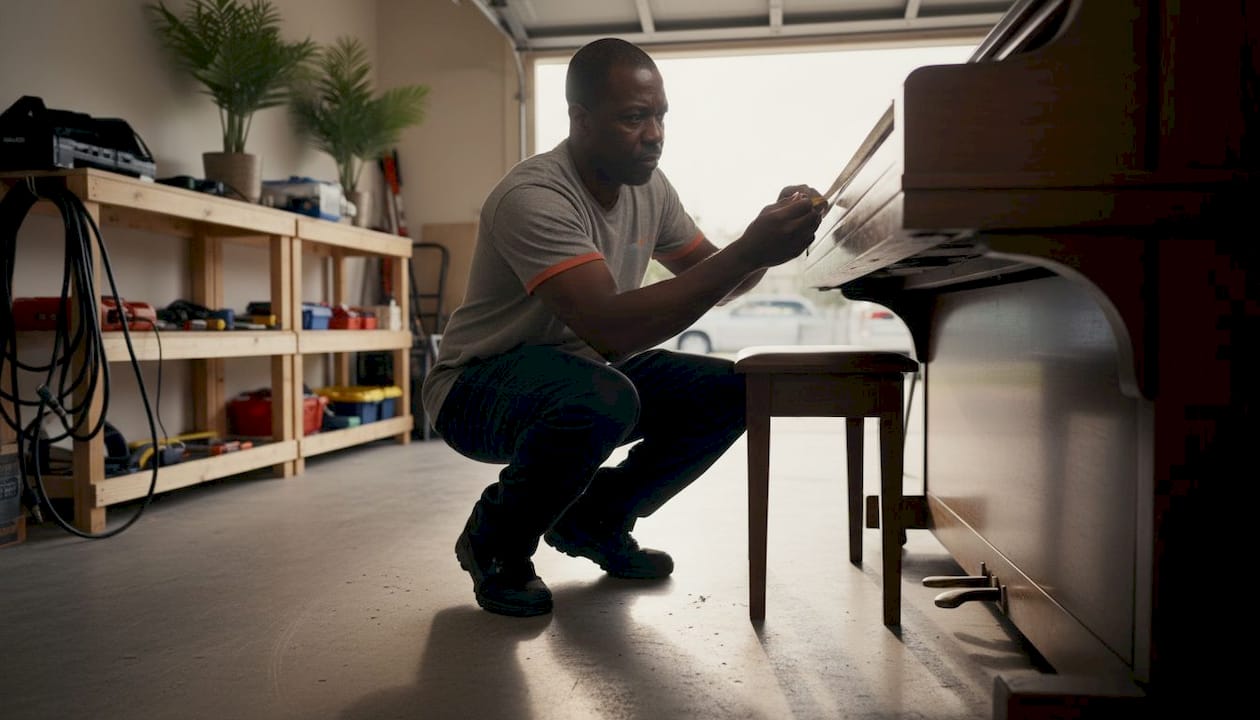
Start by identifying the maker and model. Open the fallboard (the lid covering the keys) and look for a brand name stamped on the plate or printed on the keys. Find the serial number on the cast iron plate inside the lid. That number tells you the year of manufacture, which matters when you approach donors or buyers.

Next, inspect the soundboard. A crack crossing the wood grain or wider than a business card signals structural failure. That piano cannot be sold and is unlikely to be accepted for donation. Hairline cracks running along the grain are common in older instruments and are generally acceptable.
Check the action by playing every key. Sticky keys, dead notes, or keys that do not return indicate mechanical problems. Even pianos in decent cosmetic shape may have costly internal issues that make them candidates for disposal rather than sale, unless the brand is premium.
- Brand and serial number: Look inside the lid or on the cast iron plate
- Soundboard cracks: Cross-grain cracks wider than a business card mean structural failure
- Key action: Play every note; dead or sticky keys signal costly repairs
- Tuning stability: A piano that cannot hold a tune is rarely worth donating or selling
- Cabinet condition: Warping, water damage, or veneer separation reduces value significantly
Pro Tip: Send clear photos of the soundboard, serial number, and action to a Registered Piano Technician (RPT) before spending money on an in-person appraisal. Many RPTs offer remote assessments that save you time and money.
What are your best options for donating or selling an upright piano?
Donation is the most satisfying outcome, but it comes with real conditions. Donation works best for pianos less than 20–30 years old that are in playable condition and can hold a tune. Schools, community centers, churches, and music programs in Southwest Florida regularly accept working uprights. Organizations like The Beethoven Foundation connect donors with recipients, though availability varies by region.
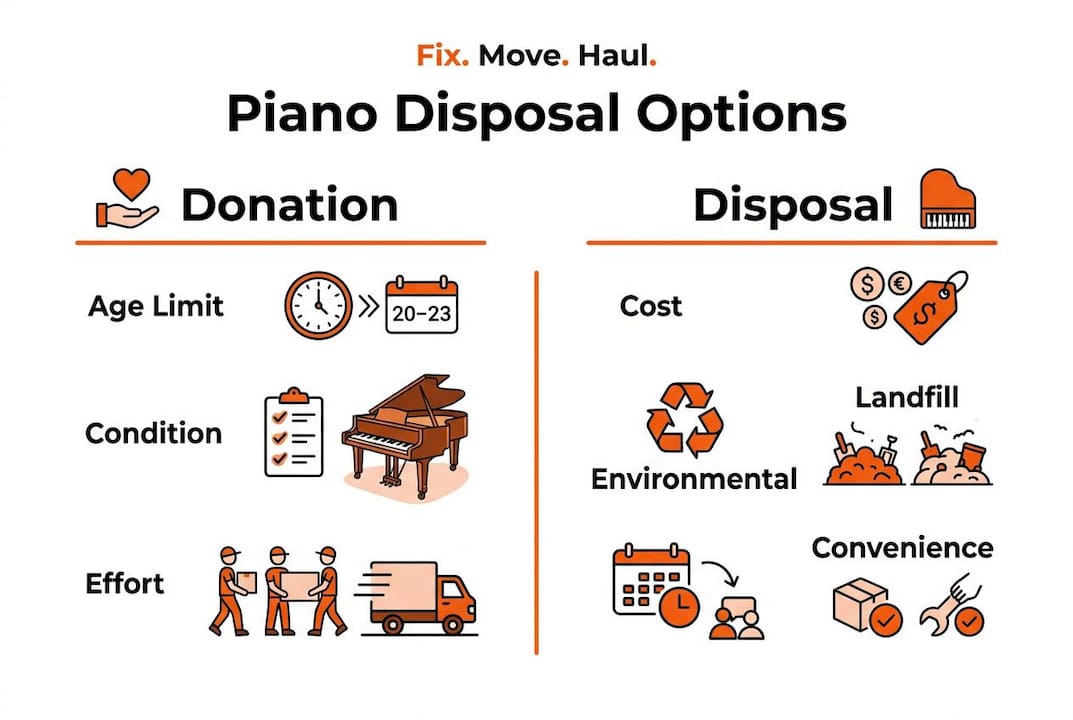
Selling an upright piano locally is possible through Facebook Marketplace or Craigslist, but set realistic expectations. Buyers in the Naples and Fort Myers area often expect you to handle the move, or they negotiate a lower price to cover their own removal costs. Price a working upright between $100 and $500 depending on brand and condition. Older or off-brand instruments often sell for $1 or are listed as free with the condition that the buyer arranges pickup.
Here is a practical sequence for pursuing donation or sale:
- Assess playability first. If the piano holds a tune and all keys work, you have a real candidate for donation or sale.
- Contact local schools and churches. Many music programs in Collier County and Lee County actively seek working uprights.
- List online with full disclosure. Post clear photos, the brand, the year, and any known issues. Hiding problems wastes everyone’s time.
- Confirm pickup logistics upfront. Donation pickups often require you to pay for removal and transportation, even when the receiving organization accepts the piano at no charge.
- Get paperwork for tax deductions. If donating to a registered nonprofit, request a written acknowledgment for your records.
Key piano donation tips to keep in mind:
- Most charities will not accept a piano that cannot be tuned or has broken strings
- Free listings on Facebook Marketplace move faster when you offer to help coordinate access
- Realtors preparing a home for listing in Naples or Bonita Springs often need pianos removed quickly. Fixmovehaul handles realtor listing prep that includes bulky item removal
How much does professional piano removal cost?
Professional removal is the safest and most reliable path for most homeowners. Professional piano movers use specialized equipment including piano dollies, ratchet straps, and moving blankets to prevent injury and property damage. Attempting to move a 500-pound upright with two people and a furniture dolly is how floors get scratched and backs get thrown out.
Standard removal costs range from $250 to $600 for upright pianos with straightforward access. Difficult conditions push that number higher.
| Removal scenario | Estimated cost |
|---|---|
| Ground floor, standard doorway | $250–$400 |
| One flight of stairs | $400–$600 |
| Basement or tight staircase | $600–$900 |
| Disassembly required | Add $100–$200 |
Factors that affect the final price include the piano’s size and weight, the number of stairs, doorway width, and whether any disassembly is needed to clear a tight hallway. In older Florida homes with narrow interior doors, disassembly of the cabinet sides is sometimes the only way out.
Pro Tip: Book piano removal on a weekday morning. Crews are fresher, traffic in Naples and Fort Myers is lighter, and you are more likely to get same-day availability from local services like Fixmovehaul.
When hiring a removal service, confirm these details before booking:
- Proof of insurance covering property damage
- Experience with upright pianos specifically, not just general furniture
- Whether the quote includes disposal or only transport to the curb
- Availability of moving help in Southwest Florida for same-day or next-day scheduling
What are the risks of DIY piano dismantling?
DIY dismantling is an option, but it carries serious risks that most homeowners underestimate. Piano strings hold roughly 20 tons of combined tension. Cutting a string under tension without proper technique causes it to snap back with enough force to cause a serious injury.
Before you touch a single string or panel, put on safety glasses and heavy work gloves. Never cut piano strings under tension. Release tension gradually using a piano tuning wrench, or leave string removal to a professional. Skipping this step turns a cost-saving project into an emergency room visit.
If you are committed to dismantling the piano yourself, follow this sequence:
- Remove the cabinet panels. Unscrew the top lid, front panel, and toe board. These are the safest parts to remove first.
- Detach the action. The action (the mechanical key assembly) slides out after removing a few screws. Handle it carefully; the parts are fragile.
- Release string tension gradually. Use a tuning wrench to loosen each pin before cutting. Never cut a string at full tension.
- Remove the harp. The cast iron plate is extremely heavy. You will need at least two people and a plan for where it goes.
- Separate materials for recycling. Wood, metal, and felt should be sorted separately.
DIY dismantling makes sense only when the piano is on a single level, you have at least three helpers, and you have the right tools. Moving an upright piano upstairs requires at least four people using stair-rated dollies, which most households do not own. For most Florida homeowners, the time and injury risk make professional removal the better value.
What are the eco-friendly options for disposing of an upright piano?
Responsible disposal matters more than most homeowners realize. Pianos contain recyclable materials including cast iron, steel, and hardwood, making them worth dismantling rather than dumping. Sending a piano to a landfill wastes hundreds of pounds of recoverable material.
Many municipalities prohibit pianos in bulky waste pickups or require the instrument to be at the curb, which creates a logistical problem for homeowners who cannot move it there alone. Check with your local county waste authority in Collier County or Lee County before scheduling any curbside pickup.
Eco-friendly disposal options at a glance:
- Junk removal with recycling: Services like Fixmovehaul’s junk removal in Southwest Florida dismantle and sort materials for proper recycling
- Scrap metal yards: The cast iron plate and steel strings have scrap value; call ahead to confirm they accept piano components
- Hardwood salvage: Piano soundboards and cabinet wood are sometimes accepted by woodworkers or salvage shops
- Specialized recycling facilities: Some facilities require disassembly before accepting piano components, so confirm requirements before hauling
| Disposal method | Cost to you | Environmental impact |
|---|---|---|
| Junk removal service | $150–$400 | Low, materials sorted for recycling |
| Scrap metal yard | Free or small fee | Low, metals recovered |
| Municipal landfill | Varies by county | High, materials wasted |
| DIY recycling | Time and labor | Low if done correctly |
Scheduling a junk removal service is the most practical path for most homeowners. A reputable local service handles disassembly, sorting, and transport in a single visit.
Key Takeaways
The most effective way to dispose of an upright piano is to assess its condition first, then match it to the right removal method based on playability, cost, and environmental impact.
| Point | Details |
|---|---|
| Condition determines options | A cracked soundboard or broken action rules out donation and sale; disposal is the only path. |
| Donation has real requirements | Pianos must be playable and under 20–30 years old; you typically pay for removal even when donating. |
| Professional removal is worth the cost | Standard upright removal runs $250–$600 and protects your home and your back. |
| DIY dismantling carries serious risk | Piano strings hold roughly 20 tons of tension; never cut them without releasing tension first. |
| Recycling beats landfill disposal | Cast iron, steel, and hardwood in pianos are recyclable; check local county rules before curbside disposal. |
What I’ve learned from watching homeowners get this wrong
Elliot here. After seeing dozens of piano removal situations across Southwest Florida, the pattern is consistent. Homeowners wait too long, then rush the decision.
The most common mistake is assuming a piano has value because it looks fine. A piano that has sat in a Florida home through years of humidity cycles often has internal damage that no amount of tuning will fix. Get the condition assessment done before you list it anywhere or call a charity. It saves you from wasted calls and embarrassing conversations.
The second mistake is treating professional removal as optional to save money. I have seen homeowners pull muscles, scratch hardwood floors, and crack doorframes trying to move a 600-pound upright with two people and a hand truck. The $300–$500 you spend on a professional crew is cheap compared to a chiropractor visit or a floor repair.
Donation is the best outcome when it works. But go in knowing you will likely pay for the move regardless. Budget for removal from the start, and the whole process feels much less frustrating.
Fixmovehaul handles upright piano removal across Southwest Florida
Getting a piano out of your home is a job that rewards preparation and the right crew. Fixmovehaul serves homeowners across Naples, Bonita Springs, Estero, Lee County, and Collier County with professional junk removal in Southwest Florida that includes upright piano hauling and responsible disposal.

The Fixmovehaul team arrives with the right equipment, handles disassembly when needed, and sorts materials for recycling wherever possible. Same-day and next-day scheduling is available, and pricing is transparent before any work begins. Whether you are clearing a home for sale, making room after a renovation, or finally dealing with that piano that has not been played in a decade, Fixmovehaul makes the process straightforward. Request a quote and get your piano removed without the stress.
FAQ
How do I know if my upright piano is worth donating?
A piano is worth donating if it is less than 20–30 years old, holds a tune, and has no cross-grain cracks in the soundboard. Most charities and schools require the instrument to be fully playable before accepting it.
What does it cost to have an upright piano removed professionally?
Professional upright piano removal typically costs $250–$600 for standard ground-floor access. Basements, tight staircases, or disassembly requirements can push costs up to $900.
Can I put an upright piano out for bulk trash pickup in Florida?
Many Florida municipalities prohibit pianos in bulky waste pickups or require the piano to be at the curb, which you must arrange yourself. Check with your local county waste authority in Collier County or Lee County before scheduling pickup.
Is it safe to dismantle an upright piano myself?
DIY dismantling is possible but risky. Piano strings hold roughly 20 tons of combined tension, and cutting them without releasing tension first can cause serious injury. Wear safety glasses and heavy gloves, and release string tension gradually with a tuning wrench before cutting.
What parts of an upright piano can be recycled?
Upright pianos contain cast iron, steel strings, and hardwood components, all of which are recyclable. Contact a local scrap metal yard or junk removal service that sorts materials, and confirm whether disassembly is required before drop-off.