
How to Dispose of Microwave Ovens Safely in Florida
How to Dispose of Microwave Ovens Safely in Florida
Proper disposal of microwave ovens means routing them through certified e-waste recycling centers, retailer take-back programs, municipal hazardous waste facilities, or donation channels. You cannot simply throw a microwave in the trash in most U.S. states, and Florida households face real consequences for skipping this step. Microwaves qualify as electronic waste, or e-waste, because they contain hazardous components including high-voltage capacitors and heavy metals. Knowing your options before your old unit sits in the garage for six months saves time, money, and potential fines.
How to dispose of microwave ovens: what the law actually requires
No federal law bans microwaves from household trash, but about 25 states restrict landfill disposal of e-waste, and microwaves fall under that category in states like California, New York, and New Jersey. That number matters because it means roughly half the country has enforceable rules that make tossing a microwave in the garbage illegal.
Florida does not currently have a statewide e-waste landfill ban covering microwaves, but that does not give you a free pass. The EPA stresses that local public works departments have final authority over appliance disposal rules. Your county or municipality may impose stricter standards than the state, and those local rules are the ones that carry fines.
Here is what you need to know before disposal:
- Check your county rules first. Collier County, Lee County, and other Southwest Florida municipalities each set their own bulk pickup and drop-off policies.
- Fines are real. Improper appliance disposal can result in fines and environmental harm, even when state law is silent.
- High-voltage capacitors are a serious hazard. Microwaves contain capacitors that store lethal charge even after unplugging. Discharging them requires training and insulated tools.
- Curbside recycling will not take it. Standard curbside programs do not accept microwaves because of hazardous components and size requirements.
Pro Tip: Call your local waste management office before doing anything else. A two-minute call confirms whether your area has bulk pickup days, special drop-off events, or fees you need to plan for.
Where to dispose of a microwave: your best options
Finding the right channel depends on whether your microwave works, how far you can transport it, and what your local programs offer. These are the main routes available to Florida households.
1. Certified e-waste recycling centers
Certified e-waste recyclers are the gold standard for microwave disposal. They process hazardous components safely and keep materials out of landfills. Search Earth911.com or call your county waste authority to find a certified facility near Naples, Fort Myers, or Bonita Springs.
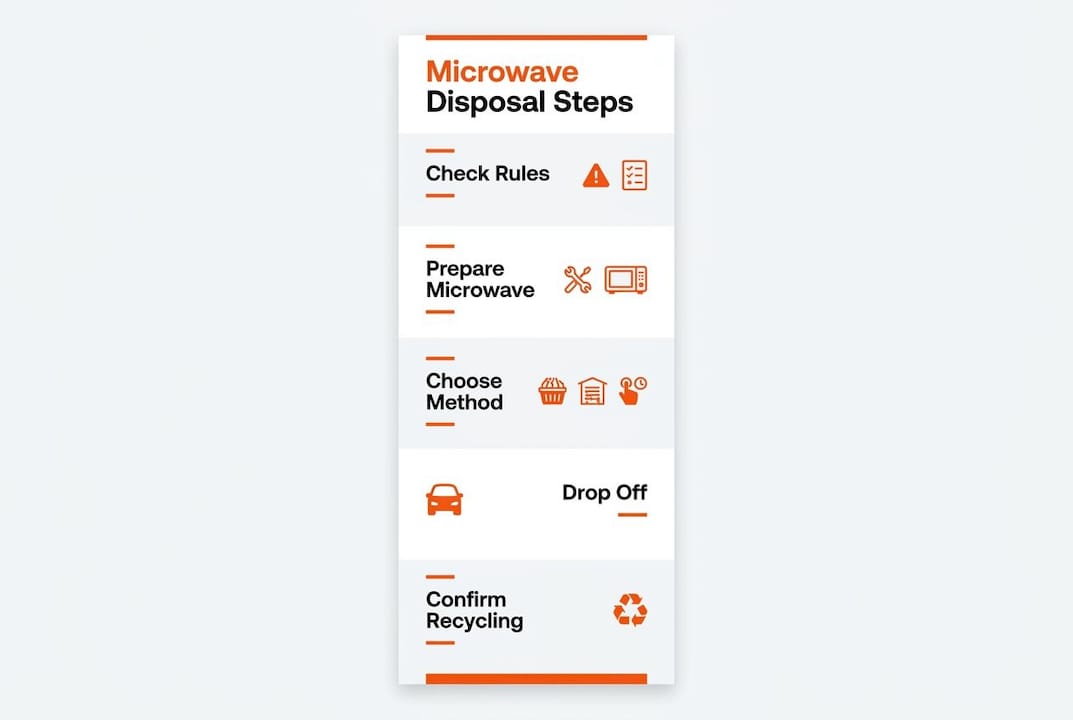
2. Retailer take-back programs
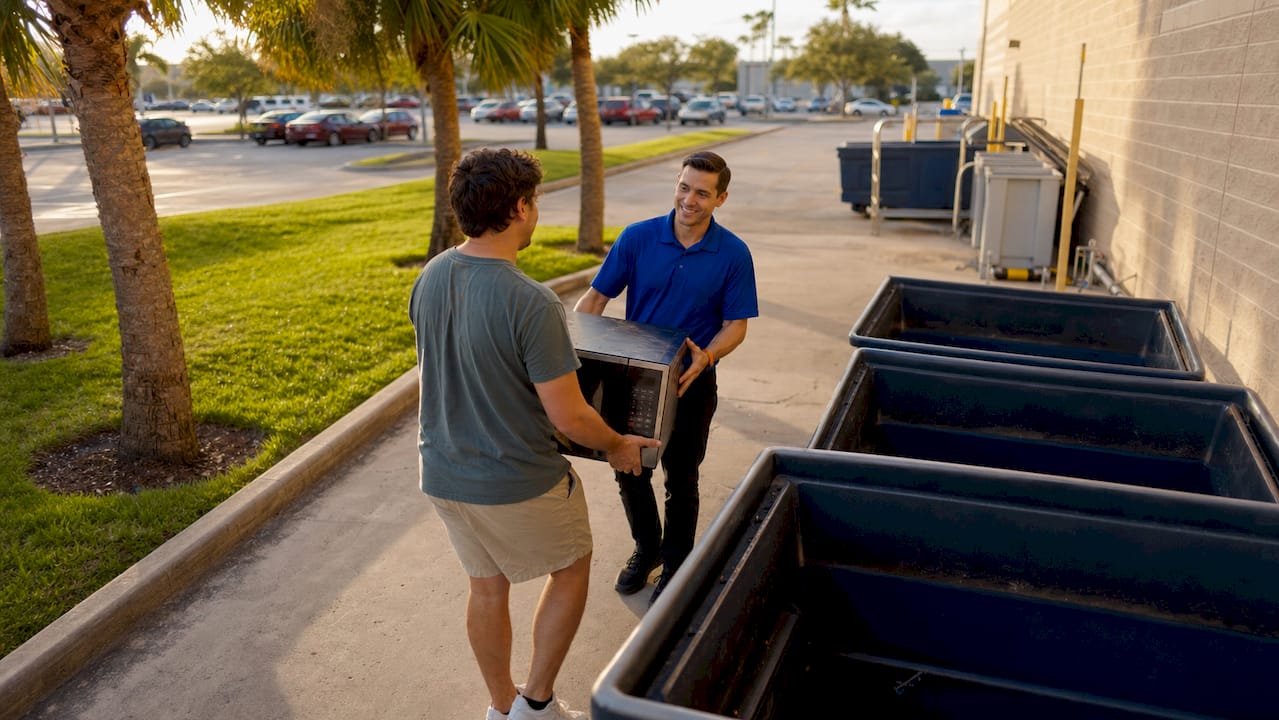
Best Buy accepts up to three small appliances per household per day for recycling, though policies vary by location and may involve fees. Call your nearest store before loading the microwave in your car.
3. Manufacturer mail-back programs
Some major appliance brands offer direct recycling options. LG, for example, provides mail-back recycling for microwaves, sometimes at no charge. Check the manufacturer’s website for current program availability.
4. Municipal hazardous waste drop-off and bulk pickup
Many Florida counties run periodic household hazardous waste events where residents drop off electronics and appliances. These are often free. Local authorities set the schedule, so check your county’s public works website for upcoming dates.
5. Scrap metal recyclers
Scrap metal yards often accept microwaves because of their steel and copper content. Requirements vary by facility. Some want the power cord removed; others want the unit intact. Call ahead before making the trip.
| Disposal method | Cost | Best for |
|---|---|---|
| Certified e-waste center | Free or low fee | Any microwave, working or broken |
| Retailer take-back (e.g., Best Buy) | Free or small fee | Households near a participating store |
| Manufacturer mail-back | Often free | Brand-specific programs |
| Municipal drop-off event | Free | Households with transport access |
| Scrap metal recycler | Free or paid | Units with intact metal components |
| Junk removal service | $50–$100 | No transport available |
How to prepare your microwave for disposal
Preparing the unit correctly protects waste workers and gives recyclers the cleanest possible material to work with. The steps are straightforward.
- Unplug and let it cool. A microwave that has been running recently may have warm components. Give it 30 minutes before handling.
- Remove the turntable and accessories. Glass turntables can break in transit and injure handlers. Remove them and wrap separately or discard with regular glass recycling if your program accepts it.
- Clean the interior. Food residue creates odors and can attract pests during storage or transport. A quick wipe-down with a damp cloth is enough.
- Do not attempt to discharge the capacitor yourself. This is the most common dangerous mistake. The high-voltage capacitor inside a microwave can hold a lethal charge for hours after unplugging. Leave that work to certified technicians.
- Check for visible damage. A cracked casing or burned interior signals potential hazardous material exposure. Flag this when you drop off the unit so handlers can take extra precautions.
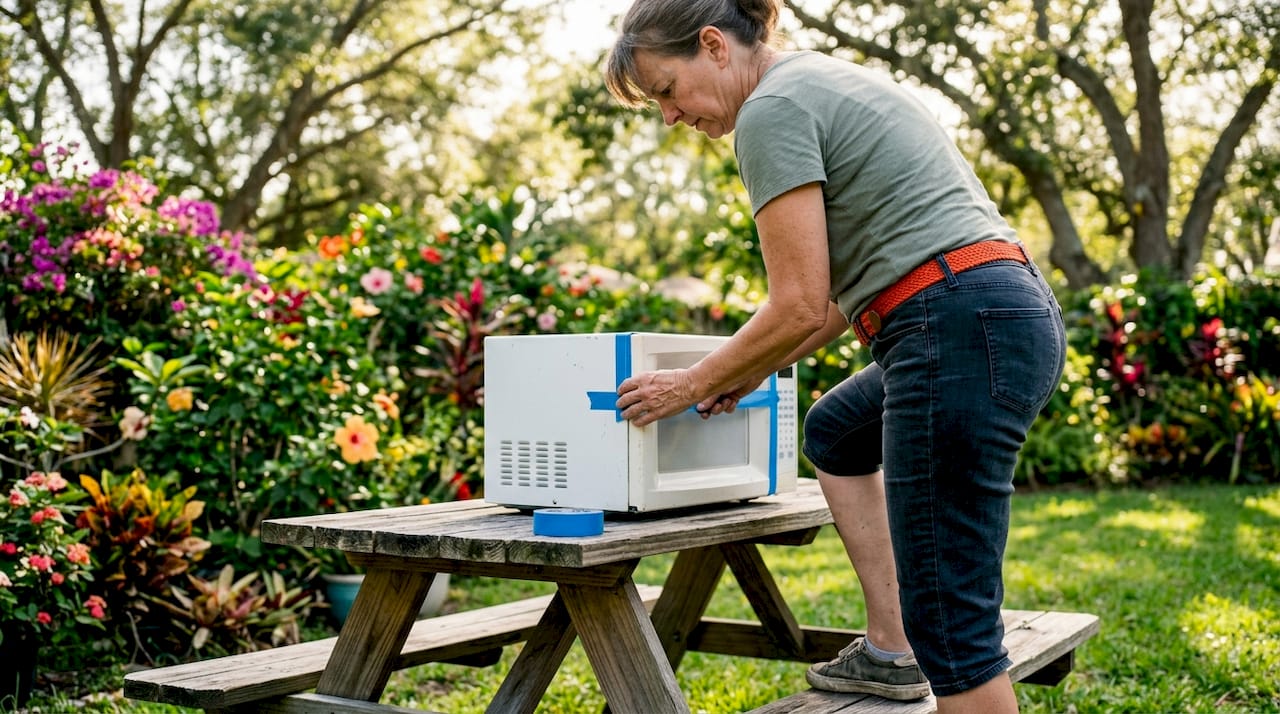
Pro Tip: Tape the door shut with painter’s tape before transport. It prevents the door from swinging open and damaging the unit or injuring someone during loading.
Alternative options: donation, resale, and junk removal
A working microwave has real value before it becomes waste. Donating to charities, shelters, or thrift stores is one of the most effective reuse options available, and it directly supports community needs. Make sure the unit is fully functional and clean before you drop it off. Goodwill, Habitat for Humanity ReStores, and local food banks are common recipients in Southwest Florida.
Selling or giving away a working microwave is equally valid. Facebook Marketplace and Nextdoor move appliances quickly in the Naples and Fort Myers areas. A free listing takes five minutes and keeps the unit out of the waste stream entirely.
When transport is the problem, professional junk removal services fill the gap. Reputable junk removers route appliances to recyclers rather than landfills, and the cost typically runs $50–$100. That price point is worth it when you have a broken microwave and no way to haul it yourself. Always ask the company directly whether they use certified recycling facilities. A company that cannot answer that question clearly is not one you want handling your e-waste.
For snowbirds and busy homeowners in Collier and Lee counties, on-demand junk removal services offer same-day or next-day pickup without requiring you to load anything yourself.
Key takeaways
Safe microwave disposal requires using a certified e-waste recycler, retailer take-back program, or municipal drop-off facility because curbside recycling and standard trash pickup do not accept microwaves in most areas.
| Point | Details |
|---|---|
| Check local rules first | Florida counties set their own disposal rules; call your waste authority before acting. |
| Curbside recycling won’t work | Microwaves require special handling outside standard curbside programs. |
| Capacitors are dangerous | Never attempt to discharge a microwave capacitor at home; leave it to certified handlers. |
| Free options exist | Municipal drop-off events, retailer programs, and manufacturer mail-back are often free. |
| Donation extends appliance life | A working microwave donated to a shelter or thrift store avoids the waste stream entirely. |
What I’ve learned from watching people get this wrong
Most people underestimate how complicated microwave disposal gets at the local level. I have seen Florida homeowners assume that because there is no statewide ban, they can toss the unit at the curb on bulk pickup day. Then they get a notice from the county, or worse, the microwave sits there uncollected for two weeks.
The detail that surprises people most is the capacitor issue. A microwave that has been unplugged for a day can still carry enough charge to cause serious injury. That is not a theoretical risk. It is the reason certified recyclers train their staff specifically for appliance handling.
My honest recommendation: plan your disposal at the same time you buy the replacement. If you are picking up a new microwave from Home Depot or Lowe’s, ask about their haul-away service at checkout. Some retailers include it in the delivery fee. If they do not, schedule a junk removal pickup for the same day the new unit arrives. Waiting turns a 20-minute task into a three-week problem.
The other thing I would push back on is the assumption that donation is only for working units in perfect condition. Thrift stores and shelters often accept microwaves that are cosmetically worn but fully functional. A unit with a scratched door and a working magnetron is still useful to someone. Clean it, test it, and offer it before you write it off as trash.
— Elliot
Fixmovehaul makes old appliance removal easy in Southwest Florida
Getting rid of a broken microwave in Naples, Fort Myers, or Bonita Springs does not have to involve a trip to the recycling center in the back of your car.
Fixmovehaul offers junk removal across Southwest Florida for households that need appliances hauled away quickly and responsibly. The team handles pickup directly from your home, routes items to certified facilities, and confirms the job is done the same day in most cases. For snowbirds managing a seasonal property or homeowners replacing multiple appliances at once, Fixmovehaul’s property cleanout service covers everything in a single visit. Transparent pricing, direct communication, and no surprise fees make it a practical choice for anyone in Collier or Lee County who needs the job done without the hassle.
FAQ
Can you throw a microwave in the trash in Florida?
Florida does not have a statewide ban on throwing microwaves in household trash, but local county and municipal rules may prohibit it. Always check with your local waste authority before disposal.
Where can I drop off a microwave for recycling?
Certified e-waste recycling centers, Best Buy stores with take-back programs, and municipal hazardous waste drop-off events all accept microwaves. Call ahead to confirm availability and any fees.
Is a broken microwave considered hazardous waste?
A broken microwave is classified as e-waste because it contains high-voltage capacitors and potentially hazardous metals. It requires special handling beyond standard trash or curbside recycling.
How much does junk removal cost for a microwave?
Professional junk removal for a microwave typically costs $50–$100. Reputable services route the appliance to a certified recycler rather than a landfill.
Can I donate a microwave that still works?
Yes. Charities, thrift stores like Goodwill, and Habitat for Humanity ReStores accept working microwaves. The unit must be clean and fully functional before donation.