How to Dispose of an Old Stove Safely in Florida
How to Dispose of an Old Stove Safely in Florida
Disposing of an old stove means safely disconnecting it from power or gas and choosing a responsible removal method that keeps hazardous materials out of Florida’s landfills. Appliance recycling programs, municipal bulk pickup, and professional junk removal services are the three most practical paths for most homeowners. Gas stoves carry additional risks that require licensed professionals for safe disconnection. Whether you’re upgrading your kitchen in Naples, clearing out a rental in Lee County, or prepping a property for sale in Collier County, this guide covers every step from disconnection to final disposal.
How to dispose of old stove: what you need to know first
Before you move a single burner grate, gather the right tools and understand what you’re dealing with. A stove is a heavy appliance, typically weighing between 100 and 200 pounds, and it connects to either a 240-volt electrical circuit or a gas supply line. Both connections require deliberate, careful handling.
Tools and safety gear you’ll need:
-
Appliance dolly with securing straps
-
Work gloves and closed-toe shoes
-
Adjustable wrenches and screwdrivers
-
Moving straps for two-person lifts
-
Cardboard sheets or plywood for floor protection
-
Painter’s tape or masking tape for doorframe protection
-
A gas line cap (for gas stoves)
-
Soapy water in a spray bottle (for leak testing)
The right moving equipment reduces injury risk and prevents damage to your floors and walls during removal. Florida homes with tile floors are especially vulnerable to cracking under a dropped appliance, so floor protection is non-negotiable.
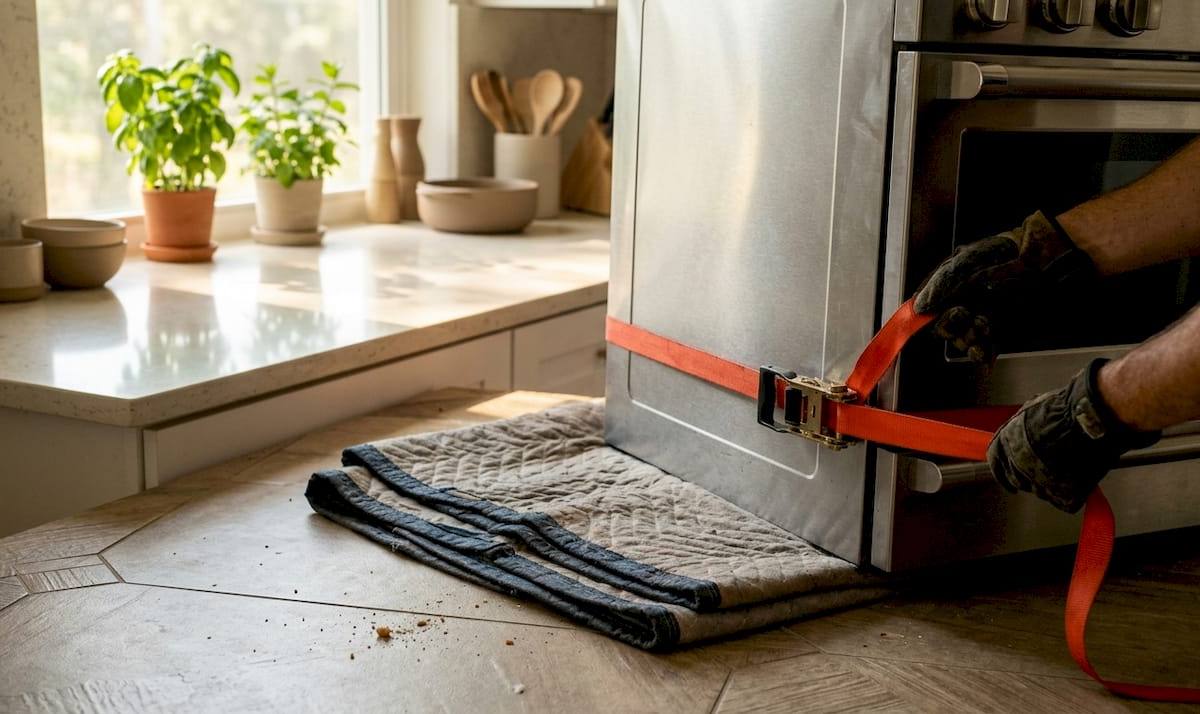
Pro Tip: Slide cardboard under the stove’s front legs before pulling it away from the wall. This protects tile grout lines and hardwood floors from scratches as the stove rolls forward.
Clear the path from your kitchen to the exit before you start. Remove cabinet doors, rugs, and any furniture that narrows the walkway. Measure doorframes in advance. A standard stove is about 30 inches wide, and many Florida homes have 32-inch doorways, which leaves very little clearance.
How to safely disconnect an electric or gas stove
Safe disconnection is the most critical step in the entire process. Skipping or rushing it creates real hazards.
Disconnecting an electric stove
-
Locate the circuit breaker labeled for the stove or range. If it’s unlabeled, turn off the main breaker.
-
Confirm power is off using a non-contact voltage tester before touching any wiring.
-
For plug-in models, simply unplug the cord from the 240-volt outlet.
-
For hardwired electric stoves, unbolt the wires from the terminal block and note each wire’s color before removal. Take a photo first.
-
Cap exposed wire ends with wire nuts and tape them securely.
Disconnecting a gas stove
Gas disconnection requires more caution. The gas stove disconnection process involves shutting off the supply valve, ventilating the area, disconnecting the flex line with two wrenches, capping the gas line immediately, and testing for leaks with soapy water. Any bubbling at the cap means gas is escaping and you need to stop and call a professional.
Licensed professionals should handle gas line disconnection in most cases. Residual gas in the line creates explosion and asphyxiation risks. Many Florida municipalities also require permitted work on gas lines, meaning DIY disconnection could create code violations that affect your homeowner’s insurance or a future property sale.
Pro Tip: After capping the gas line, spray the cap and surrounding fittings with soapy water and watch for 60 seconds. No bubbles means a safe seal. Do this even if a professional did the work.
| Stove type | Main risk | Who should disconnect |
|---|---|---|
| Electric plug-in | Shock from live outlet | Homeowner with breaker off |
| Electric hardwired | Live wiring contact | Homeowner or electrician |
| Gas with flex line | Gas leak, fire, explosion | Licensed professional recommended |
| Gas hardwired line | High-pressure gas release | Licensed professional required |
Remove detachable parts before transport. Pull out oven racks, burner grates, and drip pans. These reduce the stove’s weight slightly and prevent them from shifting and causing injury during the move.
What are the main options for disposing of an old stove?
Once your stove is disconnected, you have six realistic paths for getting rid of it responsibly.
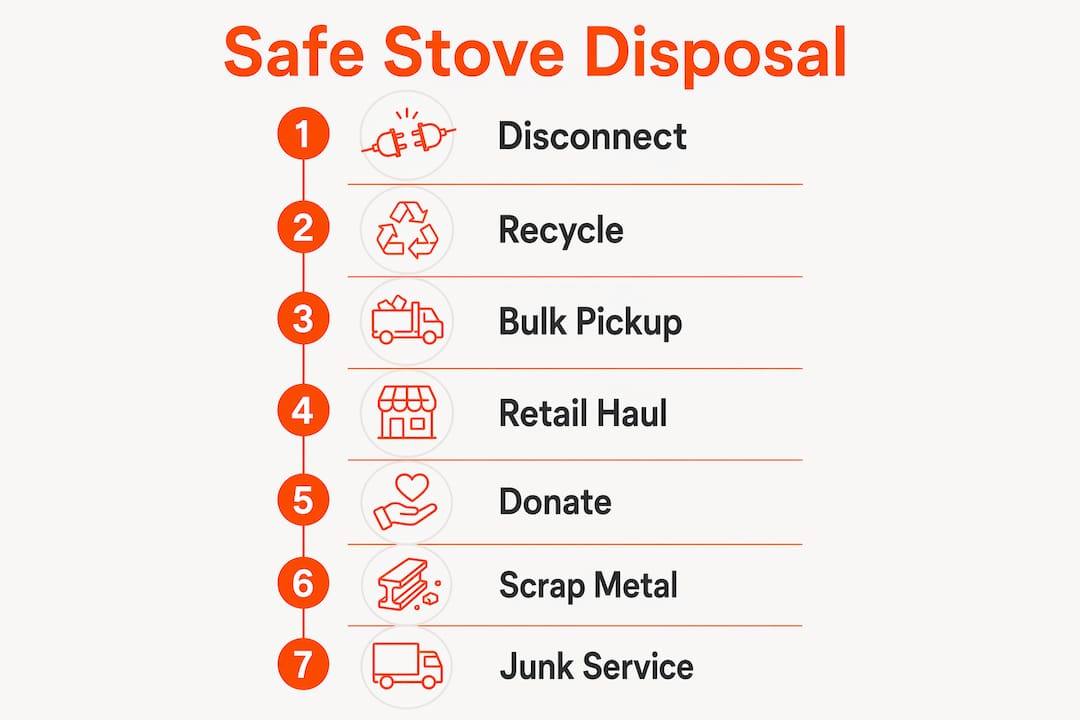
Appliance recycling programs
Appliance recycling recovers steel, aluminum, and electronic components while keeping hazardous materials out of landfills. Recyclers dismantle stoves, remove any hazardous parts, and process metals for reuse. The EPA requires that appliances containing hazardous materials be properly dismantled before landfill disposal. Recycling is the most environmentally responsible option and often free through municipal programs.
Municipal bulk pickup
Many Florida counties offer free curbside or bulk pickup for large appliances. Municipal waste programs typically require you to schedule a pickup date in advance and follow specific placement instructions, such as leaving the stove at the curb by 7:00 AM on the scheduled day. Check your county’s waste management website. Lee County, Collier County, and most municipalities in Southwest Florida have dedicated bulk item programs.
Retailer haul-away
When you buy a new stove, ask the retailer about haul-away service. Retailers sometimes remove old appliances when delivering new ones, sometimes for a fee and sometimes free. Home Depot and Lowe’s both offer this option in many Florida markets. If you’re already paying for delivery, this is the most convenient disposal method available.
Donation to charities
A working stove has real value to someone else. Organizations like Habitat for Humanity ReStore and local shelters accept functioning stoves and may offer pickup. Donating a working appliance also qualifies for a tax deduction. Get a written receipt from the organization and document the stove’s fair market value for your records.
Scrap metal yards
Stoves are mostly steel, and scrap yards pay by weight. The payout is modest, but it covers gas money and keeps the appliance out of a landfill. Call ahead to confirm the yard accepts appliances and ask about current steel prices before making the trip.
Professional junk removal services
Junk removal services handle pickup, heavy lifting, and responsible disposal, but at a higher cost than self-disposal methods. The trade-off is convenience. You schedule a time, they show up, they haul it away. For homeowners without a truck, a dolly, or a second person to help, this is often the most practical choice.
| Disposal method | Cost to you | Environmental benefit | Effort required |
|---|---|---|---|
| Municipal bulk pickup | Free | High (recycled) | Low |
| Appliance recycling program | Free | High | Low to medium |
| Retailer haul-away | Free or small fee | Medium | Very low |
| Donation | Free | High (reuse) | Medium |
| Scrap metal yard | Paid to you | Medium | Medium |
| Professional junk removal | Fee varies | Medium to high | Very low |
How to safely move a stove out of your home
Moving a stove without the right technique causes back injuries and property damage. Both are avoidable.
-
Remove all detachable parts first. Oven racks, grates, and drip pans add weight and shift during transport. Box them separately.
-
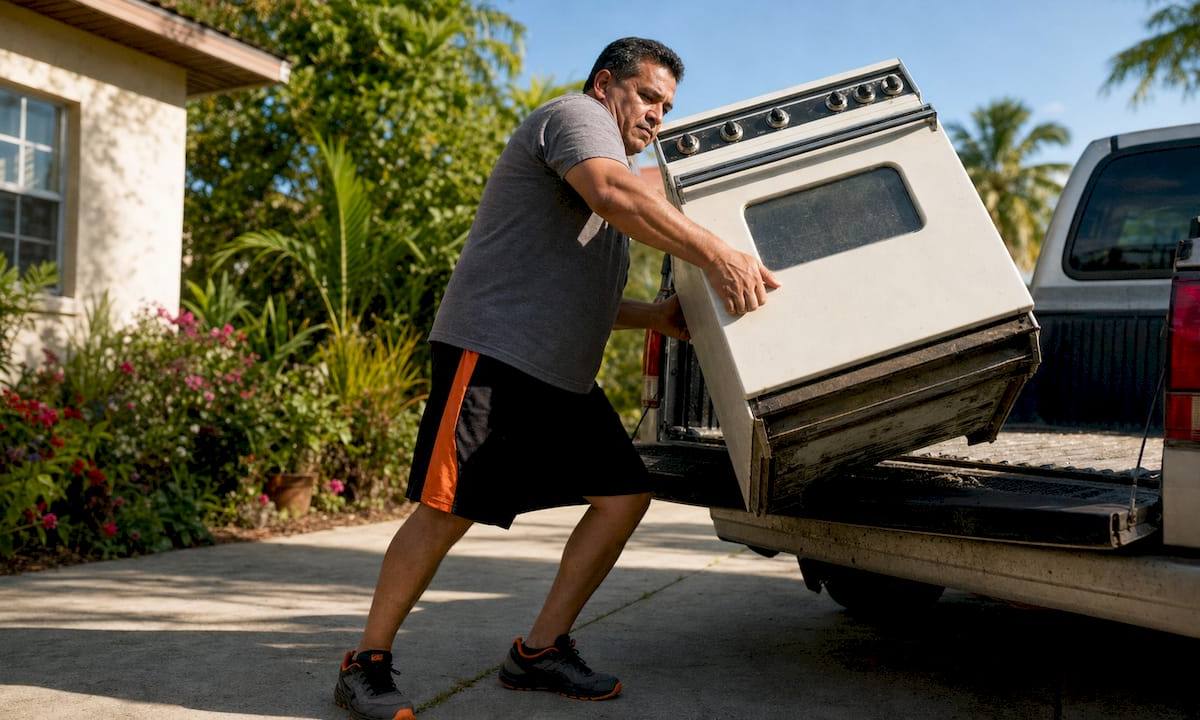
Tilt, don’t drag. Slide the appliance dolly under the stove’s base, tilt the stove back onto the dolly, and secure it with straps before moving. Never drag a stove across tile or hardwood.
-
Bend your knees. When lifting or repositioning, keep the stove close to your body and use your legs, not your lower back. This applies to both people in a two-person lift.
-
Protect floors and walls. Lay cardboard or plywood from the kitchen to the exit. Tape foam or blankets to doorframes where the stove will pass through.
-
Communicate constantly. One person calls the moves. “Ready, lift, step left, lower” prevents the miscommunication that causes drops and injuries.
-
Use a ramp for exterior steps. Florida homes on slabs often have a small step at the garage or back door. A portable ramp makes dolly transport much safer than trying to bump the stove down a step.
Pro Tip: Wrap the stove in moving blankets before loading it into a truck or trailer. This prevents scratches on the appliance and protects the truck bed or trailer walls from dents.
Once the stove is outside, keep it upright during transport. Laying a stove on its side can damage internal components and create a mess from residual grease. If you’re donating it, the recipient will want it in working condition.
Key takeaways
Disposing of an old stove safely requires proper disconnection from power or gas, followed by choosing a responsible disposal method such as recycling, donation, or professional removal.
| Point | Details |
|---|---|
| Gas disconnection needs a pro | Licensed professionals prevent leaks, code violations, and insurance issues. |
| Recycling beats landfill disposal | EPA regulations require proper dismantling; recycling recovers steel and keeps hazardous parts contained. |
| Municipal pickup is often free | Florida counties like Lee and Collier offer bulk appliance pickup at no charge. |
| Donation has financial upside | Working stoves donated to Habitat for Humanity ReStore qualify for a tax deduction. |
| Moving equipment prevents injury | An appliance dolly, straps, and floor protection reduce the risk of back injury and property damage. |
What I’ve learned from watching homeowners handle gas stoves
The most common mistake I see is homeowners assuming that turning off the gas valve is all it takes to safely disconnect a gas stove. It isn’t. The flex line still holds residual gas, and an improper disconnection or a missing cap can leak enough gas to create a serious hazard in an enclosed kitchen. I’ve seen this create real problems for homeowners who later discovered the disconnection wasn’t code-compliant when they went to sell the property.
My honest recommendation: if you have a gas stove, call a licensed plumber or gas technician for the disconnection. The cost is usually modest and the peace of mind is worth every dollar. For electric stoves, a confident homeowner with the breaker off can handle the disconnection safely.
On the environmental side, I’ve found that most Florida homeowners don’t realize how easy recycling actually is. Lee County and Collier County both have bulk pickup programs that handle the heavy lifting for you. If your stove still works, donating it to a local shelter or Habitat for Humanity ReStore is genuinely the best outcome. Someone gets a functioning appliance, you get a tax deduction, and nothing goes to a landfill.
For homeowners who want the whole process handled without lifting a finger, services like Fixmovehaul exist specifically for this. They serve Naples, Estero, Bonita Springs, and the broader Southwest Florida area, and they handle the heavy lifting, transport, and responsible disposal so you don’t have to coordinate multiple steps yourself. You can read more about on-demand junk removal options in Southwest Florida if you want to compare approaches before deciding.
— Mark
Old stove removal made easy with Fixmovehaul
Getting rid of a heavy appliance in Southwest Florida doesn’t have to mean renting a truck, recruiting neighbors, or figuring out your county’s bulk pickup schedule.

Fixmovehaul provides appliance junk removal across Naples, Bonita Springs, Estero, Lee County, and Collier County. The team handles the heavy lifting, responsible disposal, and transport so you can focus on your kitchen upgrade instead of logistics. Same-day service is often available, and pricing is transparent upfront. If you’re buying a new stove through Home Depot or Lowe’s and need the old one removed at the same time, Fixmovehaul also offers a Home Depot and Lowe’s pickup service that coordinates both steps in one visit. Book directly through the website or call for a quick quote.
FAQ
Can I put an old stove out with regular trash?
No. Most Florida municipalities prohibit placing large appliances in standard trash pickup. You must schedule a bulk item pickup or use a recycling or junk removal service.
Do I need a permit to disconnect a gas stove in Florida?
Florida building codes require permitted work on gas lines in most jurisdictions. A licensed plumber or gas technician handles this correctly and keeps your home code-compliant.
Will Home Depot or Lowe’s take my old stove?
Both retailers offer haul-away services in many Florida markets when delivering a new appliance. Confirm availability and any fees when placing your order.
Can I donate a stove that still works?
Yes. Organizations like Habitat for Humanity ReStore accept working stoves and may offer pickup. You can claim a tax deduction based on the appliance’s fair market value.
How much does professional junk removal cost for a stove?
Pricing varies by location and company. Professional junk removal costs more than self-disposal methods but includes heavy lifting, transport, and responsible disposal in one service.